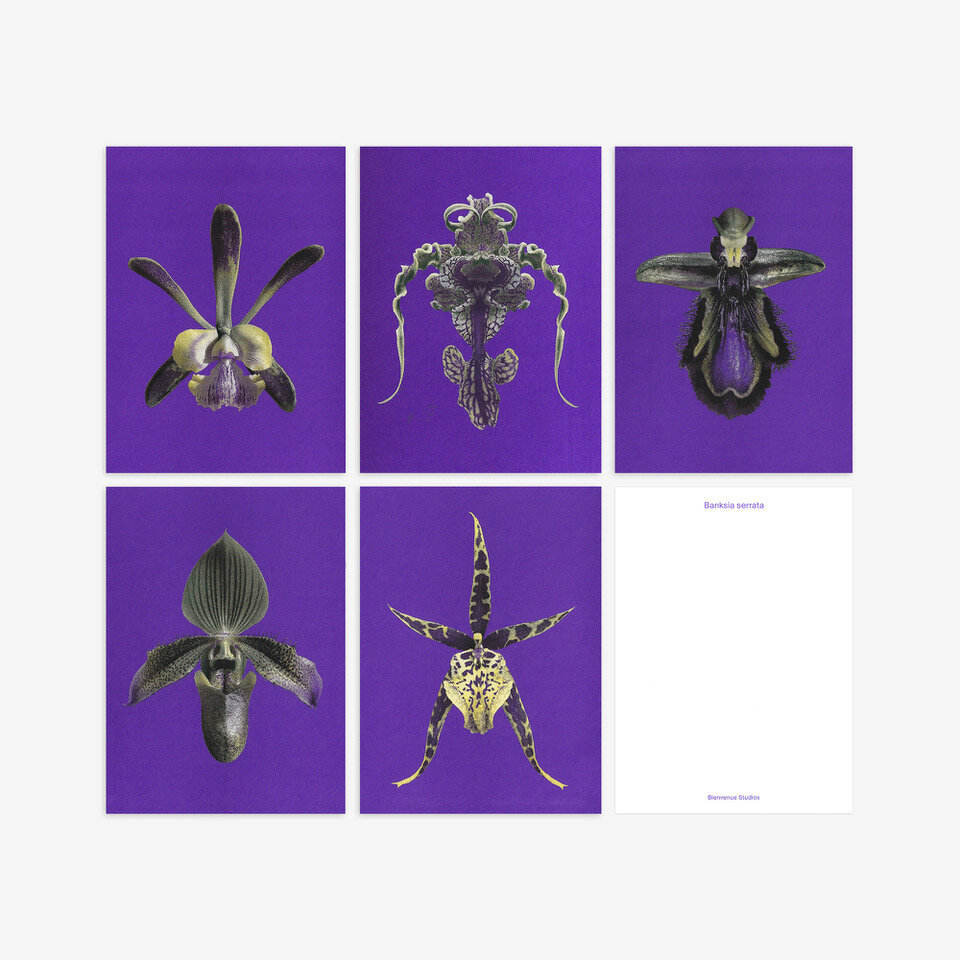
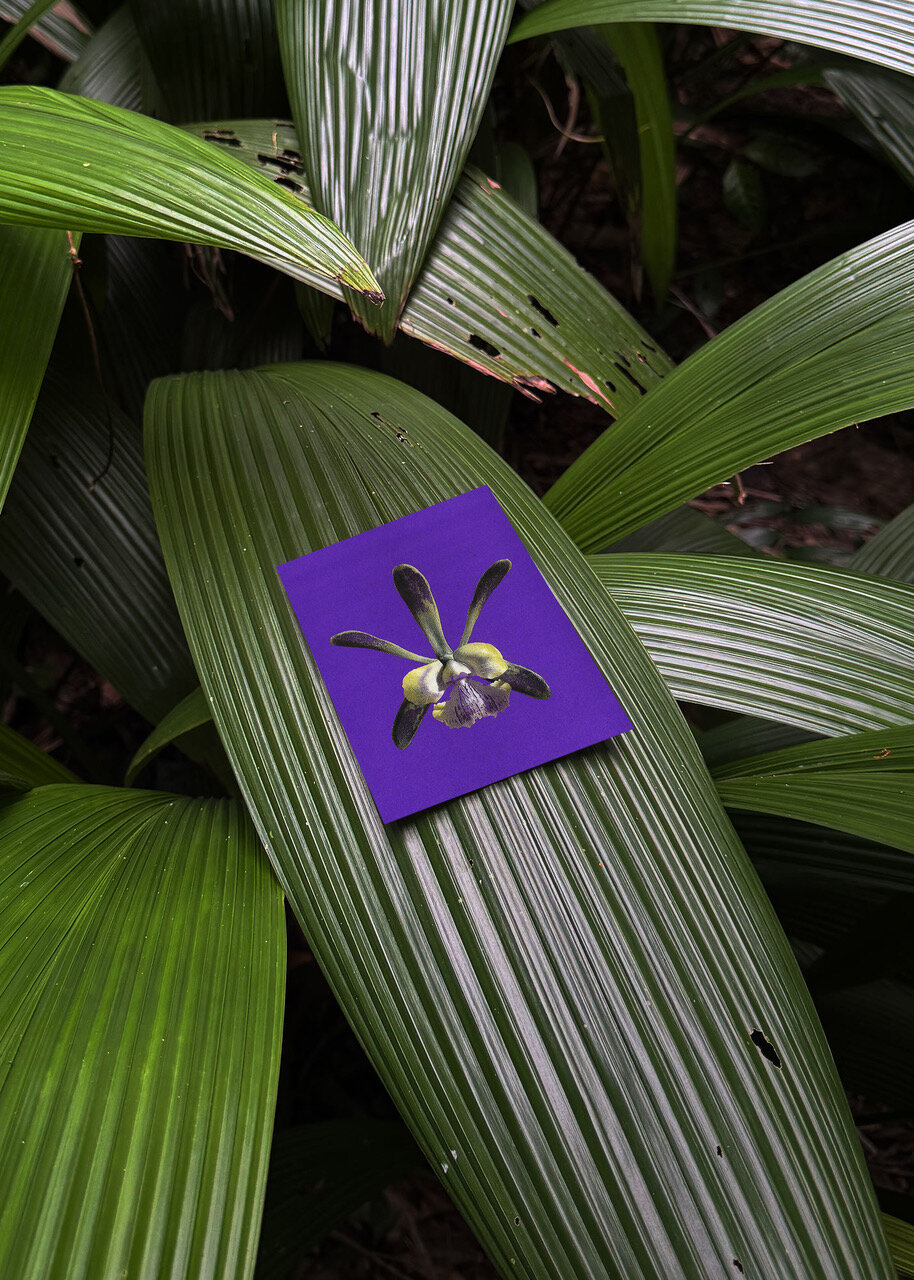
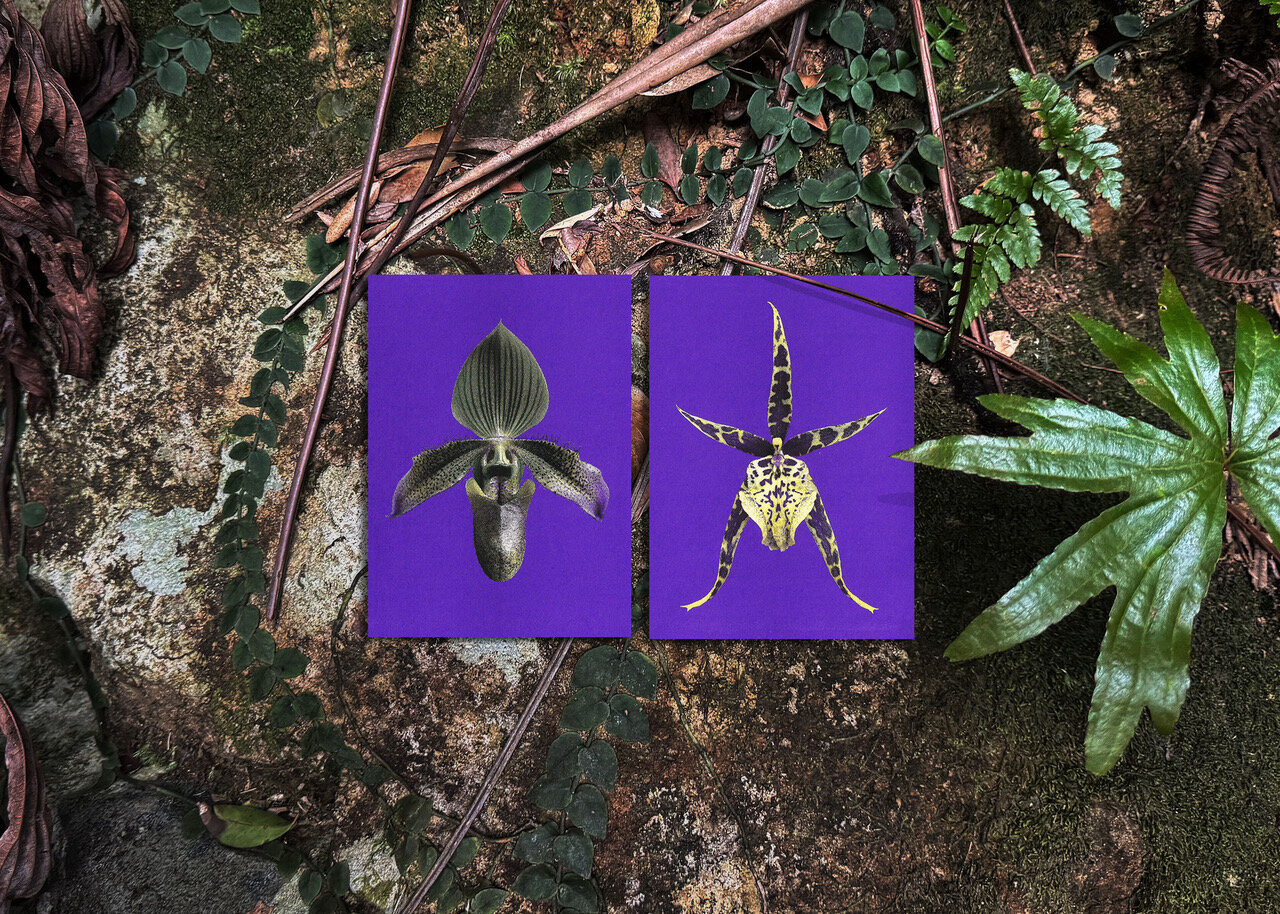
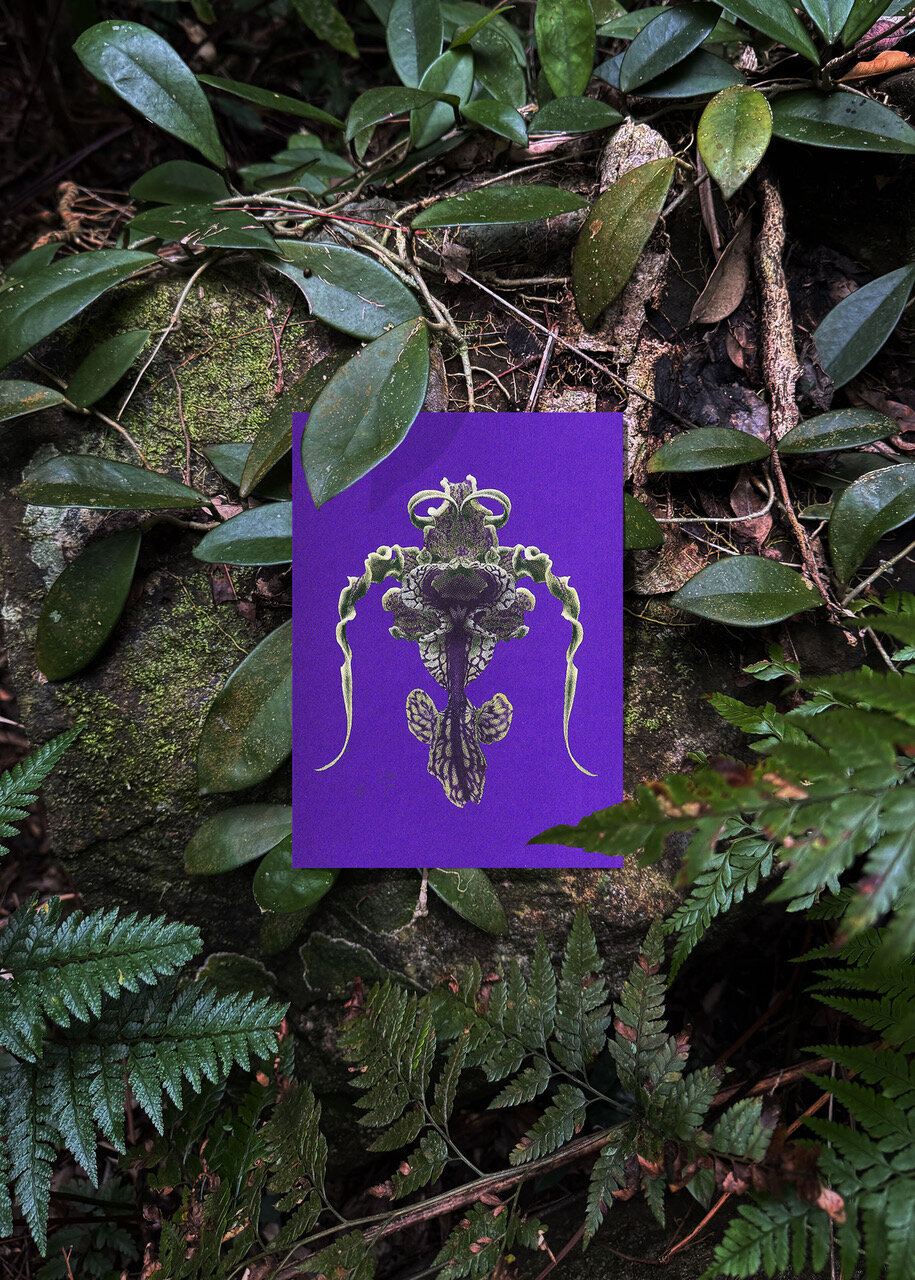
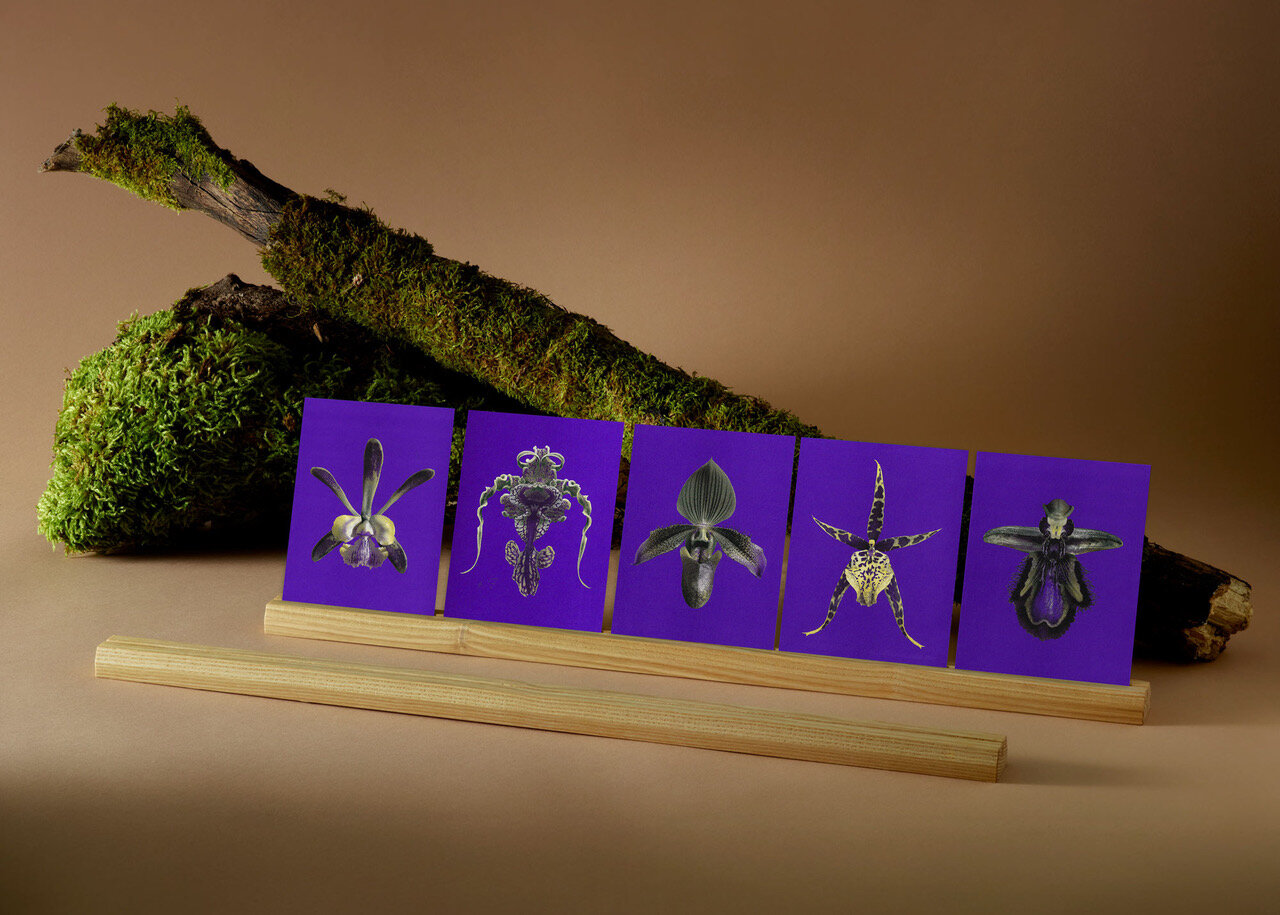
floral mimicry NEW Small Print (Postcard) Collection
A collection of 5 assorted prints (suitable for framing or posting). Offset print.
about this collection: Orchids are among the most fascinating plants in the world—not only because of their great diversity, but also because of their extraordinary pollination strategies.
More than 2,500 years ago, they were already being cultivated in China, where they were regarded as symbols of love, beauty, and purity. In Central America, the Aztecs also valued certain orchid species and used the vanilla orchid as a precious spice long before the colonial era.
They are especially well known for their ability to use mimicry—that is, to imitate other living beings or environmental signals in order to attract pollinators. An impressive example is provided by species of the genus Ophrys, whose flowers resemble female bees or wasps. Male insects are deceived and attempt to mate with the flower. In doing so, pollen sticks to their bodies and is carried to the next flower. Other orchids imitate the appearance of nectar-rich flowers, even though they do not produce any nectar themselves. In this way, they attract pollinators without offering a reward. Often, an orchid species is specialized to just one particular insect species.
These sophisticated strategies show that survival in nature depends not only on strength or size, but also on adaptability and deception. Orchids are therefore an impressive example of the creativity and diversity of evolution.